Colocation vs. public cloud in 2026: which is right for your growing business?
March 18, 2026

Aron Wagner
CEO & Co-Founder
The "everything in the cloud" era is over. In 2026, 86% of CIOs plan to move workloads back to private environments — colocation, on-premises, or hybrid setups. After a decade of all-in cloud migration, businesses are discovering that not every workload belongs on a public cloud platform.
This isn't a retreat from modern infrastructure. It's a maturation. Businesses are getting smarter about matching workloads to the right environment. And for growing companies making infrastructure decisions today, the colocation-vs-cloud question deserves a serious answer.
The case for public cloud
Public cloud earned its place for good reasons:
- Low upfront costs. No hardware to buy, no data center to lease. Spin up a server in minutes, pay by the hour. For startups and early-stage businesses, this lowers the barrier to entry dramatically.
- Elastic scalability. When traffic spikes — a product launch, a viral moment, seasonal demand — public cloud can absorb it. You don't need to plan capacity months in advance.
- Built-in services. Managed databases, load balancers, CDNs, monitoring, security tools — the public cloud bundles a lot of operational complexity into managed services.
- Geographic distribution. Need to serve users on three continents? Public cloud lets you deploy in dozens of regions without setting up physical infrastructure anywhere.
For variable, unpredictable, or globally distributed workloads, public cloud is hard to beat.
The case for colocation
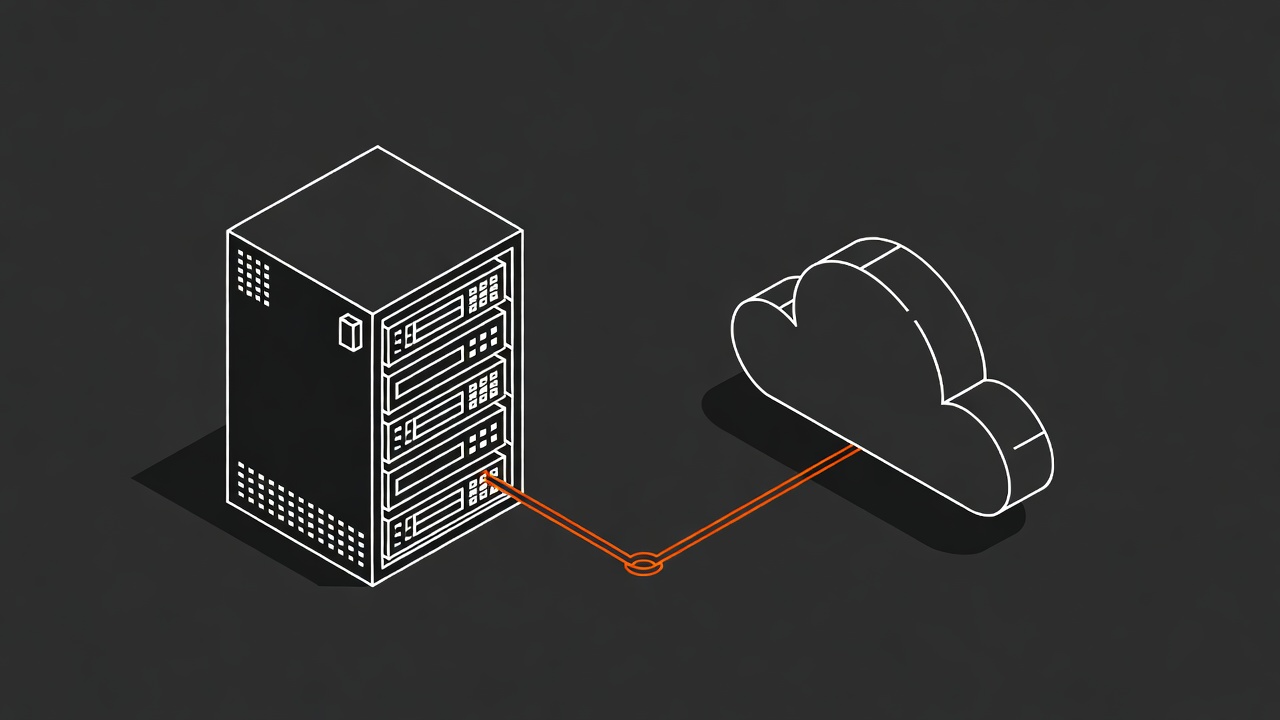
Colocation means placing your own servers in a third-party data center that provides power, cooling, physical security, and network connectivity. You own the hardware. They provide the facility.
- Full hardware control. You choose your servers, your storage, your network equipment. No multi-tenant resource contention. No "noisy neighbor" problems degrading your performance. You get exactly what you spec.
- Predictable costs. Colocation pricing is typically a fixed monthly rate for space, power, and connectivity. No variable compute charges, no surprise line items, no egress fees eating into your margin. You know what next month's bill will be before the month starts.
- Compliance advantages. When you own the hardware and control physical access, meeting compliance requirements for HIPAA, PCI-DSS, SOC2, and data residency becomes more straightforward. You're not relying on a shared-responsibility model where your provider handles some controls and you handle others. For businesses dealing with data jurisdiction and sovereignty, this is a meaningful edge — more on that in our breakdown of data sovereignty in 2026.
- Consistent performance. Dedicated hardware means consistent latency, consistent IOPS, consistent throughput. For databases, real-time applications, and high-frequency workloads, this consistency matters.
- Long-term economics. For stable, predictable workloads, colocation is significantly cheaper than public cloud over a 3-5 year horizon. The upfront hardware investment pays for itself quickly when you're not paying hyperscaler margins on every compute hour.
The hybrid sweet spot
Here's the reality most infrastructure teams are discovering: it's not either-or. The optimal architecture for a growing business often combines both.
Run on colocation:
- Production databases with predictable capacity needs
- Core application servers handling steady-state traffic
- Data-heavy workloads where storage and transfer costs compound
- Compliance-sensitive workloads that benefit from hardware control
- GPU workloads for AI/ML where dedicated hardware outperforms shared instances
Run on cloud:
- Development and staging environments that spin up and down
- Variable workloads with unpredictable traffic patterns
- Geographic edge deployments for latency-sensitive applications
- Disaster recovery and failover capacity
- Experimental or short-lived projects
This hybrid approach gives you the cost predictability and performance of colocation for your core infrastructure, with the elasticity of cloud for everything else.
Making the decision: key questions
What does your workload pattern look like? If your resource usage is stable and predictable, colocation wins on cost. If it swings wildly, cloud elasticity has more value.
What's your planning horizon? If you're optimizing for the next 6 months, cloud flexibility makes sense. If you're planning 2-5 years out, colocation's economics dominate.
What are your compliance requirements? The more regulated your industry, the more valuable hardware control becomes. Colocation simplifies audit trails and physical security controls.
What's your team's capacity? Colocation requires more hands-on infrastructure management. If your team is small and already stretched, managed cloud services reduce operational burden. If you have a DevOps or infrastructure team, colocation lets them do what they're good at.
How much are you spending on egress? If data transfer costs are a significant line item, colocation — where outbound bandwidth is typically included in your monthly rate — immediately improves your economics. If you're currently on AWS, Azure, or GCP, here's what a move off public cloud actually looks like.
Why one provider for both matters
The worst version of hybrid infrastructure is managing two completely separate providers, two billing relationships, two support channels, and two sets of tooling. The best version is a single provider that offers both cloud and colocation under one roof.
When your cloud and colo run on the same provider's network, you get:
- Simplified networking between cloud and colocated workloads
- Single billing relationship and support channel
- Consistent tooling and management interfaces
- Easy migration path as workloads mature from cloud to colo or vice versa
American Cloud: cloud and colocation, one provider
American Cloud offers both cloud infrastructure and colocation services. Run your elastic workloads on American Cloud's compute, storage, and Kubernetes platform. Run your steady-state production on colocated hardware in American Cloud's US-based data centers. Or use both, connected on the same network.
No egress fees — between cloud and colo, or between your infrastructure and the internet. 25%+ cheaper than AWS, Azure, and GCP on the cloud side. Predictable, transparent pricing on colocation. All on independently owned, US-based infrastructure.
Whether your business needs cloud, colocation, or both, you shouldn't have to stitch together multiple providers and deal with the complexity that comes with it.
Ready to build the right hybrid strategy? Explore American Cloud's cloud and colocation services — all under one roof, with zero egress fees and transparent pricing.